Best Landscape Photography Spots in Joshua Tree National Park, California
Location & Landscape
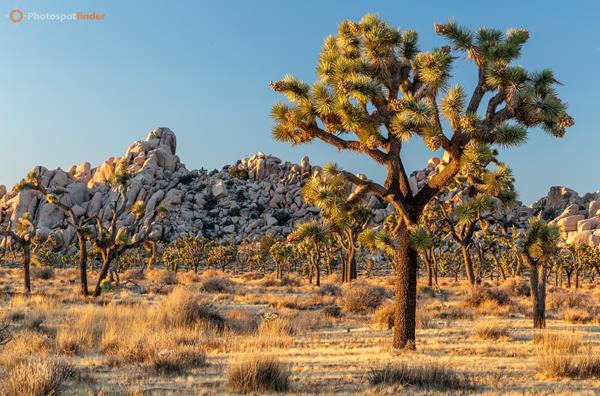
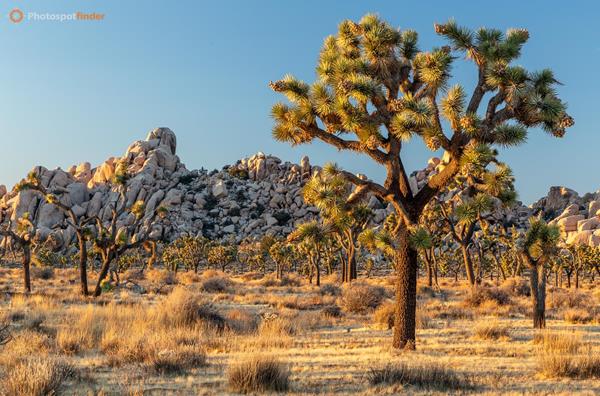
Joshua Tree National Park covers nearly 800,000 acres in southeastern California, bridging the Mojave and Colorado Deserts. Its landscape includes rugged mountains, desert valleys, iconic Joshua trees, and massive granite rock formations. The park features two main entrances—Joshua Tree and Twentynine Palms—providing access to distinct photographic zones.Access to key locations is via well-maintained park roads, scenic pullouts, and established hiking trails. Seasonal changes dramatically influence photography: spring offers wildflowers across the desert floor, summer provides long golden hours but can be extremely hot, fall brings softer light and comfortable temperatures, and winter delivers crisp air with excellent clarity for star and sunrise photography. Trails range from short walks to moderate hikes, and early morning or late afternoon light emphasizes textures in rocks, trees, and sand dunes. Minimal light pollution also makes night photography ideal throughout the year.
Top Photo Opportunities
Hidden Valley: A popular area with massive boulder formations, Joshua trees, and hiking trails. Sunrise or sunset light enhances shadows on the rocks and adds warmth to the desert landscape.Keys View: A high viewpoint overlooking the Coachella Valley and Salton Sea. Offers panoramic desert vistas and dramatic cloudscapes, particularly during sunset or after storms.
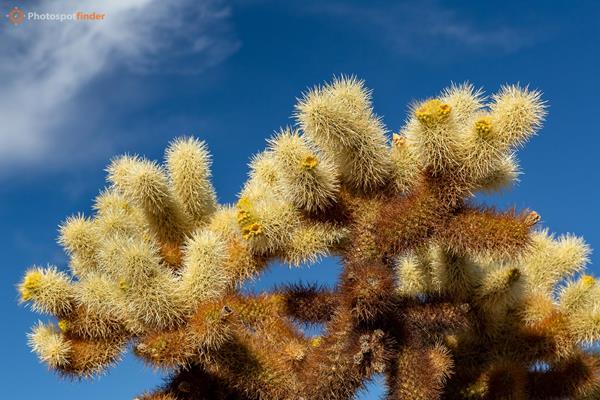
Cholla Cactus Garden: Dense stands of cholla cacti provide unique foregrounds. Early morning light creates glowing “cholla cactus halos,” while soft evening light emphasizes the desert’s texture and depth.
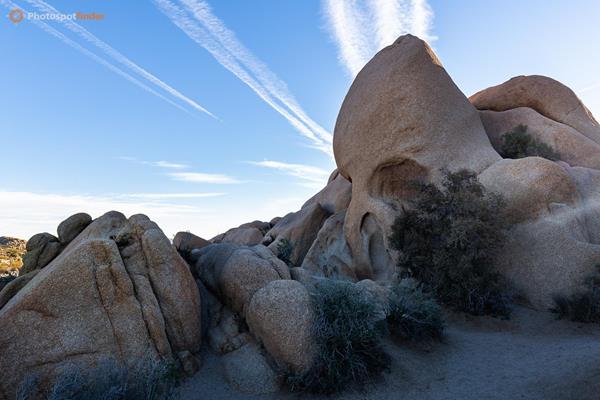
Skull Rock: A boulder naturally shaped like a skull along the main park road. Sunrise and sunset add dramatic shadows; tidepools of sand and surrounding Joshua trees provide additional compositional elements.
Arch Rock: A naturally formed granite arch in a quiet hiking area. Perfect for framing shots, silhouettes, and long-exposure compositions under daylight or twilight.
Ryan Mountain: Offers elevated desert vistas with panoramic views of boulder fields, Joshua trees, and distant mountains. Sunrise or golden hour light enhances the desert’s color and texture.
Cap Rock: Iconic boulder formations and Joshua trees ideal for wide-angle and minimalist compositions. Early morning light casts long shadows across the desert floor.
Night Sky / Star Trails (Multiple Locations): The park’s low light pollution makes it ideal for astrophotography. Joshua trees and rock formations work as striking foreground elements for star trails, Milky Way, and long exposures.
Photography Considerations
Foreground interest, such as Joshua trees, rock formations, and desert vegetation, helps anchor compositions and adds scale. Leading lines can be formed by trails, dunes, or cactus rows, guiding the viewer through the image. Fog is rare, but morning haze can soften distant mountains; storm clouds and sunset skies provide dramatic lighting.Recommended gear includes wide-angle lenses for landscapes and rock formations, telephoto lenses for distant mountain details or wildlife, and a tripod for sunrise, sunset, and night photography. Neutral density and polarizing filters can help manage exposure and enhance colors. Patience is critical, particularly for capturing optimal light, desert shadows, or the perfect star-filled sky. Exploring multiple angles from hiking trails, roads, and overlooks maximizes compositional variety and seasonal diversity.
Visitor Tips & Key Notes
Plan visits during early morning or late afternoon for optimal lighting and minimal crowds. Trails and viewpoints vary from easy walks to moderate hikes; suitable footwear, sun protection, and water are essential. Seasonal variations provide unique photographic opportunities: spring wildflowers, summer golden hours, fall light, and winter night skies.Photographers can explore multiple zones—Hidden Valley, Cholla Cactus Garden, Arch Rock, Ryan Mountain, and Keys View—to capture a diverse range of desert perspectives. Revisiting locations under different light, cloud, or seasonal conditions provides greater image variety. Use our interactive map, images, and other resources to plan efficient photography sessions. Sharing experiences or insights in our comment section helps other photographers discover new angles and enjoy the park’s stunning desert landscapes.