Best Landscape Photography Spots in Rocky Mountain National Park, Colorado
Location & Landscape
Rocky Mountain National Park spans over 265,000 acres in northern Colorado, with elevations ranging from approximately 7,500 feet in the eastern foothills to 14,259 feet at Longs Peak. The park encompasses subalpine and alpine ecosystems, dense forests, glacial valleys, pristine lakes, waterfalls, and expansive meadows.Access is primarily via Trail Ridge Road, Highway 36, and Highway 34, with numerous trailheads providing entry to both popular and remote photography locations. Seasonal conditions influence accessibility and compositions: spring brings snowmelt waterfalls and early wildflowers, summer offers lush greenery and open trails, fall delivers golden aspens and warm light, and winter provides snow-dusted peaks and frozen lakes. Early morning and late afternoon provide the best light, shadows, and vibrant colors for landscape photography.
Top Photo Opportunities
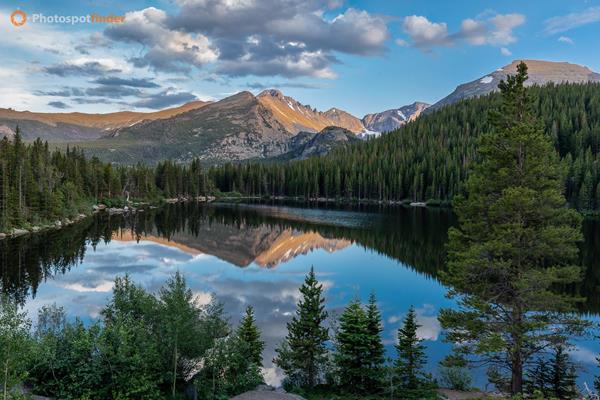
Bear Lake: Bear Lake sits at 9,475 feet along the Bear Lake Corridor and offers one of the most accessible alpine compositions in Rocky Mountain National Park. Its near-circular shoreline allows flexible positioning to align reflections of Hallett Peak and the Continental Divide. Calm mornings often produce clean mirror images, especially in summer and early fall. Autumn introduces warm tones in surrounding vegetation, adding contrast to the evergreen forest. Use shoreline rocks, docks, or subtle curves in the water’s edge as foreground structure. Arrive early to avoid wind and surface disturbance, and compose low to strengthen reflections and depth.Dream Lake: Dream Lake rests in a glacial cirque below Hallett Peak and Flattop Mountain. The elongated basin naturally directs the viewer’s eye toward the central summit. Early morning light illuminates upper cliffs first, creating contrast with shaded forest below. Snowfields often linger into early summer, adding tonal separation against dark granite. Position close to the shoreline to emphasize reflections, and incorporate partially submerged logs or rocks for foreground interest. Wind increases quickly after sunrise, so timing remains critical for smooth water and balanced exposure.
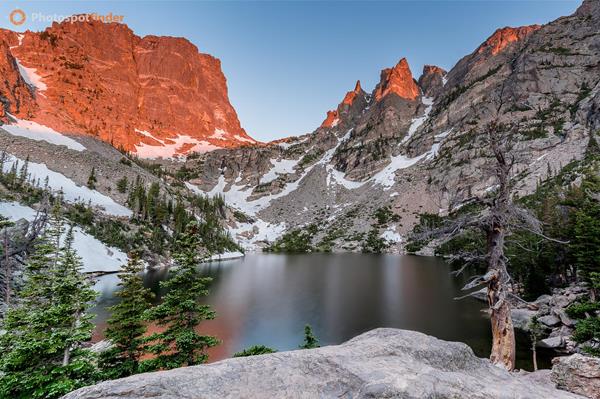
Emerald Lake: Emerald Lake sits at the end of the Bear Lake–Emerald Lake Trail, surrounded by steep granite walls and alpine tundra. Its higher elevation shortens the growing season and preserves snow patches well into summer. Morning light enters evenly, supporting balanced exposures and calm reflections. Afternoon side light enhances rock textures and reveals structure in the surrounding cliffs. Use shoreline boulders to anchor wide-angle compositions, and adjust your position to balance the dominant peaks with open water and sky.
Sprague Lake (Spruce Lake): Sprague Lake provides a broad, accessible view of the Continental Divide. A level loop trail circles the lake, allowing multiple vantage points for aligning reflections of Longs Peak and nearby ridges. Early morning typically offers the calmest water and the strongest mirror effect. Surrounding spruce and fir trees frame the shoreline and add vertical elements to the composition. Incorporate grasses or stones in the foreground to create depth, and monitor light direction to maintain detail in both sky and reflected peaks.
Moraine Park: Moraine Park forms a wide glacial valley carved by ancient ice flow. The Big Thompson River winds through open meadows, creating natural leading lines toward the Continental Divide. Sunrise and sunset emphasize layered ridgelines and subtle elevation changes across the valley floor. Elk frequently move through the meadow, adding scale and subject opportunities. Roadside pullouts provide elevated viewpoints. Use a telephoto lens to compress mountain layers or a wide-angle perspective to highlight river curves and foreground grasses.
Alberta Falls: Alberta Falls cascades along Glacier Creek between Bear Lake and Glacier Gorge. The waterfall flows over angular granite slabs, dividing into multiple channels that respond well to long exposures. Nearby rocks and evergreen branches help frame horizontal or vertical compositions. Visit early or under overcast conditions to reduce harsh contrast and preserve highlight detail in the water. A tripod and neutral density filter allow flexibility with shutter speed while maintaining texture in surrounding rock surfaces.
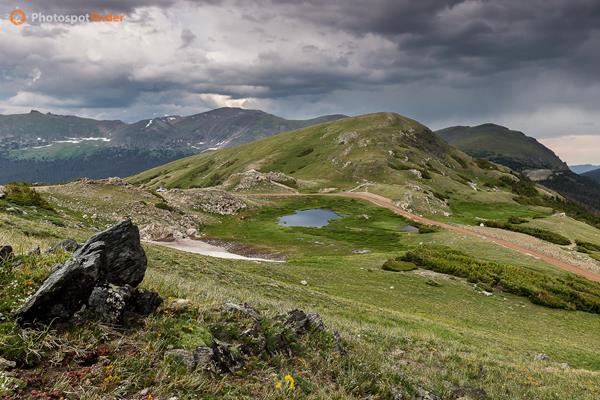
Trail Ridge Road Overlooks: Trail Ridge Road crosses the Continental Divide above 12,000 feet and ranks among the highest continuous paved roads in North America. Numerous overlooks provide expansive views of alpine tundra, cirques, and distant peaks. Low-angle sunrise and sunset light accentuate ridgelines and cast long shadows that define scale. Weather shifts quickly at this elevation, so monitor cloud movement and exposure carefully. Use pullouts strategically to capture sweeping panoramas or isolate repeating mountain layers with a telephoto lens.
Longs Peak from Wild Basin or Chasm Lake Trail: Longs Peak rises to 14,259 feet and dominates the southern skyline of the park. From Wild Basin, you gain layered compositions with forested foregrounds and distant ridges. From the Chasm Lake Trail, the view tightens beneath the east face, highlighting the Diamond and steep alpine walls. Soft morning or evening light enhances rock texture and shadow definition. Snowfields and talus slopes add contrast and structure. Plan for changing weather and strong winds when composing at higher elevations.
Lily Lake: Lily Lake, located along Highway 7 near the park boundary, offers a quieter alternative with consistent mountain reflections. The small lake reflects Longs Peak and surrounding foothills when wind remains minimal. A level loop trail allows flexible composition angles, including reeds and shoreline grasses for foreground depth. Morning and evening light soften contrast and enhance subtle color in surrounding vegetation. Position slightly off-center to balance reflected peaks with open water and maintain visual depth.
Photography Considerations
Foreground elements such as lakes, rivers, rocks, trees, or wildflowers anchor compositions and provide scale. Leading lines can be formed by streams, ridgelines, or trails. Weather changes quickly at high elevations, creating opportunities for dramatic clouds, mist, or storms. Sunrise and sunset provide dynamic light, while overcast conditions soften shadows and reveal textures.Recommended gear includes wide-angle lenses for panoramic landscapes, telephoto lenses for distant peaks or wildlife, and a tripod for long-exposure or low-light shots. Polarizing filters reduce glare and enhance sky color, while neutral density filters allow creative long exposures of waterfalls, moving clouds, or lake reflections. Exploring multiple viewpoints and revisiting locations under different lighting, weather, or seasonal conditions maximizes compositional diversity.
Visitor Tips & Key Notes
Plan visits during early morning or late afternoon for optimal light and smaller crowds. Trails range from easy walks to strenuous alpine hikes; layered clothing, sturdy footwear, and water are essential. Seasonal conditions affect accessibility: spring may have snow at higher elevations, summer provides full access, fall delivers golden aspens and crisp skies, and winter adds snow-covered peaks and frozen lakes.Photographers can explore lakes, waterfalls, meadows, and high passes for diverse compositions. Revisiting locations under different light, weather, or seasonal conditions expands creative possibilities. Use our interactive map, images, and other resources to plan efficient photography sessions. Sharing experiences or insights in our comment section helps other photographers discover new angles and enjoy Rocky Mountain National Park’s dramatic landscapes.