Best Wildlife Photography Spots in Rocky Mountain National Park, Colorado
Location & Landscape
Rocky Mountain National Park spans the Continental Divide and features montane forests, broad valleys, alpine tundra, and high-elevation passes. Moraine Park and Horseshoe Park are open grassland valleys that concentrate grazing animals near water sources. Trail Ridge Road climbs above treeline, providing access to tundra habitat rarely reachable by vehicle. On the park’s western side, the Kawuneeche Valley follows the Colorado River headwaters and supports wet meadows and willow flats.Wildlife activity changes with elevation and season. Spring and summer bring animals to higher meadows and tundra, while fall concentrates elk in valleys during the rut. Early morning and evening provide the best light and animal movement. Many wildlife areas are accessible via roadside pullouts, valley trails, and established overlooks.
Top Wildlife Photo Opportunities
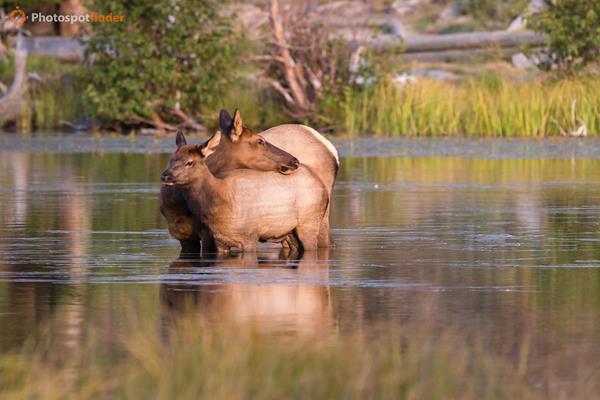
Moraine Park – Cub Lake Road and Meadow Pullouts: Moraine Park’s open meadows and winding road attract elk, mule deer, coyotes, and occasional black bears. The Big Thompson River provides water and feeding areas. Early morning offers calm conditions and soft light. Fall is especially productive during the elk rut. Photographers work from roadside pullouts and meadow edges, capturing grazing, sparring, and herd movement with mountain backdrops.Horseshoe Park – Endovalley Road: Endovalley Road passes through broad grasslands bordered by low hills that support elk, pronghorn, coyotes, and raptors. Animals frequently cross open areas near the road. Morning and late afternoon light produce strong side lighting. Photographers shoot from vehicle pullouts, focusing on feeding behavior, alert postures, and group interactions across open terrain.
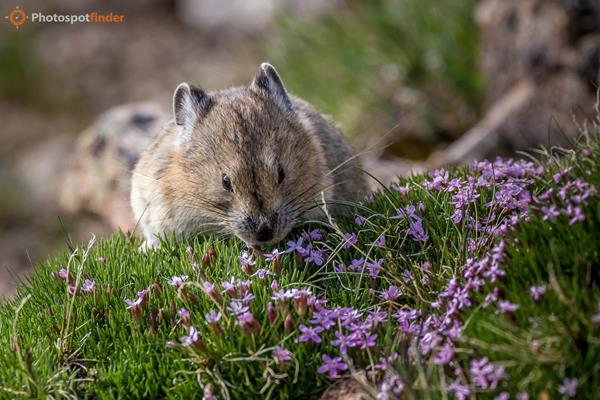
Trail Ridge Road – Alpine Tundra Pullouts: Above treeline, Trail Ridge Road provides access to tundra habitat where bighorn sheep, ptarmigan, marmots, and pika are regularly photographed. Summer is peak season once snow recedes. Mid-morning through early afternoon light works best due to elevation. Photographers position at designated pullouts and short trails, capturing animals foraging among rocks and tundra plants with expansive alpine scenery.
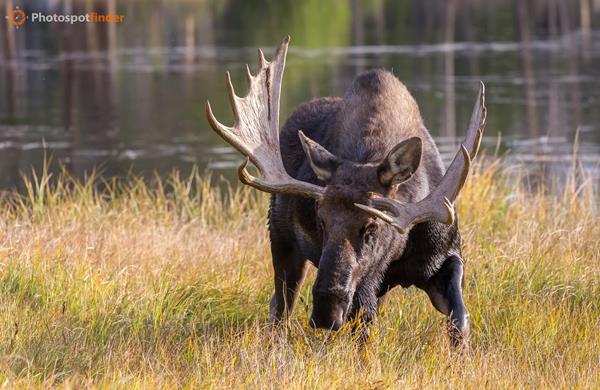
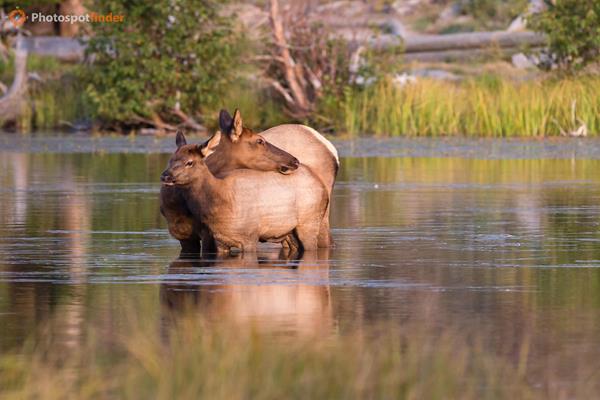
Kawuneeche Valley – Colorado River Trail Area: The willow-lined river corridor attracts moose, elk, foxes, and waterfowl. Moose are often visible feeding in shallow water during summer mornings. Early light filters through fog in cool conditions. Photographers work from trail edges and roadside pullouts, capturing wading, browsing, and movement through wetlands.
Across the park, aligning elevation, season, and light direction significantly improves wildlife encounters.
Photography Considerations
Rocky Mountain National Park’s open valleys and alpine zones allow clean environmental compositions that place animals within dramatic landscapes. Shooting from lower angles in valleys helps isolate subjects against distant ridgelines. Early morning provides the calmest conditions and most consistent wildlife activity, while overcast days reduce harsh contrast at high elevations.Telephoto lenses in the 400–600mm range are ideal for most wildlife encounters, with shorter lenses useful for animals closer to trails and roads. Tripods are practical at pullouts but less effective along busy roads. Fast shutter speeds are essential for moving animals and birds in flight. Continuous autofocus and burst shooting help capture brief behavioral moments.